Indian Head Massage: What It Is and What to Expect
Indian head massage explained: a seated, fully clothed massage of the head, neck and shoulders. What happens, how long it takes and who it suits.
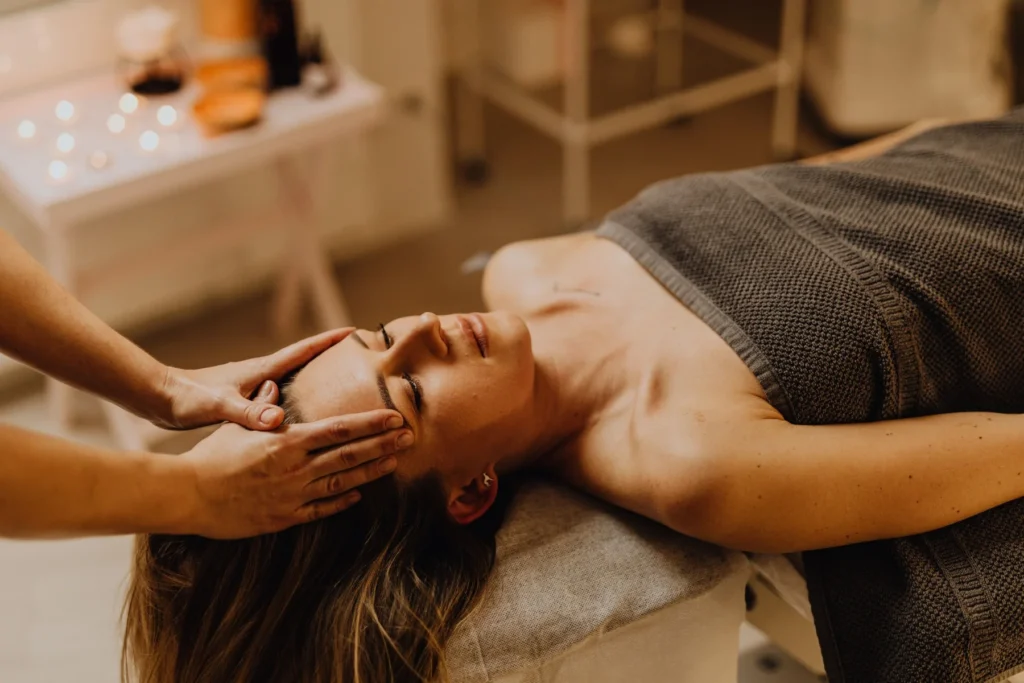
Indian head massage is a seated massage of the upper back, shoulders, neck, scalp and face. You stay fully clothed, there’s no couch, and a session usually takes 20 to 45 minutes. It’s a good choice if you carry tension in your neck and shoulders, or you’d rather not undress for a massage. This guide is mainly for clients who want to know what happens in a session and who it suits.
Where Indian head massage comes from
Head massage has long been part of family life in India, where it’s known as champi and is often done with oil as part of hair care. Narendra Mehta developed it into a full treatment for the upper body and brought it to the West in the 1970s, later founding a training centre in north London.
Today it’s taught on courses across the UK and offered in clinics, spas, offices and at events.
What happens in a session
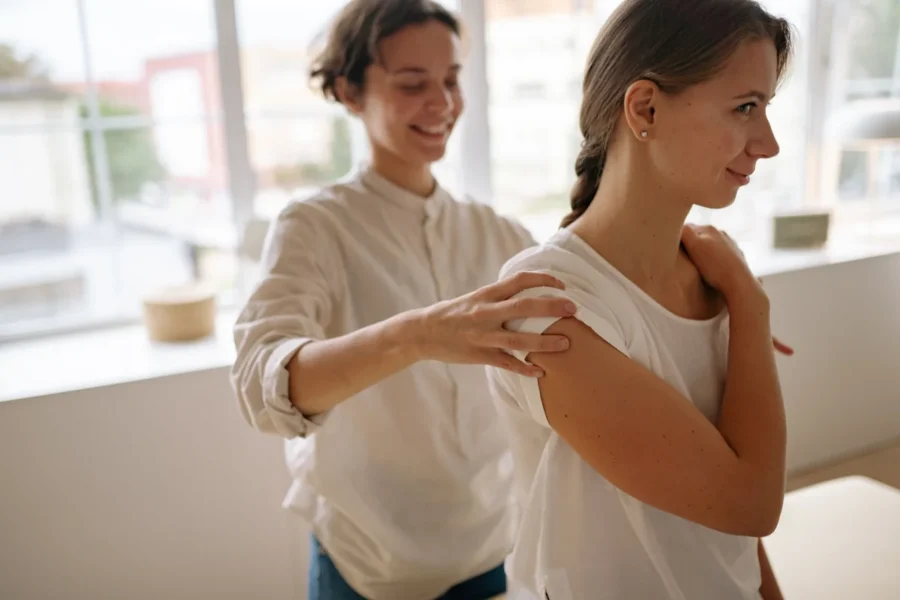
You sit on a low-backed chair, fully clothed. The therapist usually stands behind you and works through the body from the top of the back upwards:
- Upper back and shoulders: kneading and pressure to ease tension.
- Upper arms: squeezing and rolling movements.
- Neck: gentle work along the muscles at the back and sides.
- Scalp: firm, rhythmic movements through the hair, a bit like a deep shampoo.
- Face: light pressure around the temples, forehead and jaw, often at the end.
The pressure is usually medium, and the pace slows towards the end so you can relax.
Oil or no oil?
You can choose. Some therapists offer a warm oil for the scalp, such as coconut or sesame, in keeping with the tradition. It’s lovely for the hair but leaves it oily, so you’ll want to wash it afterwards.
If you’re having a session on your lunch break or before a meeting, ask for a dry treatment. It works through your hair and clothes and leaves no trace.
What Indian head massage can and can’t do
Many people find it deeply relaxing, and it’s popular for easing tight shoulders after long hours at a desk. Some find it helps them unwind and sleep better.
There’s very little research on Indian head massage itself, and no scientific support for claims that it treats medical conditions or makes hair grow. Treat it as a relaxing treatment for tension, not a cure. Our guide to the health benefits of massage covers what the wider evidence supports.
Who it suits, and when to check first
Indian head massage suits most adults, and it’s especially useful if you:
- spend long hours at a screen and hold tension in your neck and shoulders
- prefer not to undress or lie on a couch
- only have half an hour
- find a full-body massage too much
Check with your GP first, or choose another treatment, if you have a recent head or neck injury, recent surgery in the area, a scalp infection or skin condition, or severe neck problems. If you’re having a migraine, wait until it has passed. If you feel unwell or have a temperature, rebook.
If you like being treated clothed, you may also enjoy shiatsu or reflexology, which you also have fully clothed (for reflexology, only your shoes and socks come off).
Common questions
Will it mess up my hair?
Yes, a little. Even without oil, the scalp work leaves hair tousled. Bring a brush if you’re going straight back to work.
How long is a session?
Usually 20 to 45 minutes. Shorter sessions are common at work and at events.
Can I have it while pregnant?
Many therapists will offer it, as you’re sitting up and clothed. Tell your therapist how many weeks you are, and see our guide to pregnancy massage for when to check with your midwife.
How much does it cost?
It’s usually cheaper than a full-body massage because it’s shorter. See our guide to massage prices in London for typical costs.
Therapists share course recommendations and techniques in the techniques and CPD forum. For more treatments explained in plain English, browse our massage guides.