Pregnancy Massage: What to Expect and When It Is Safe
Is pregnancy massage safe? How a session works, the best positions at each stage, what the research says, and when to check with your midwife first.
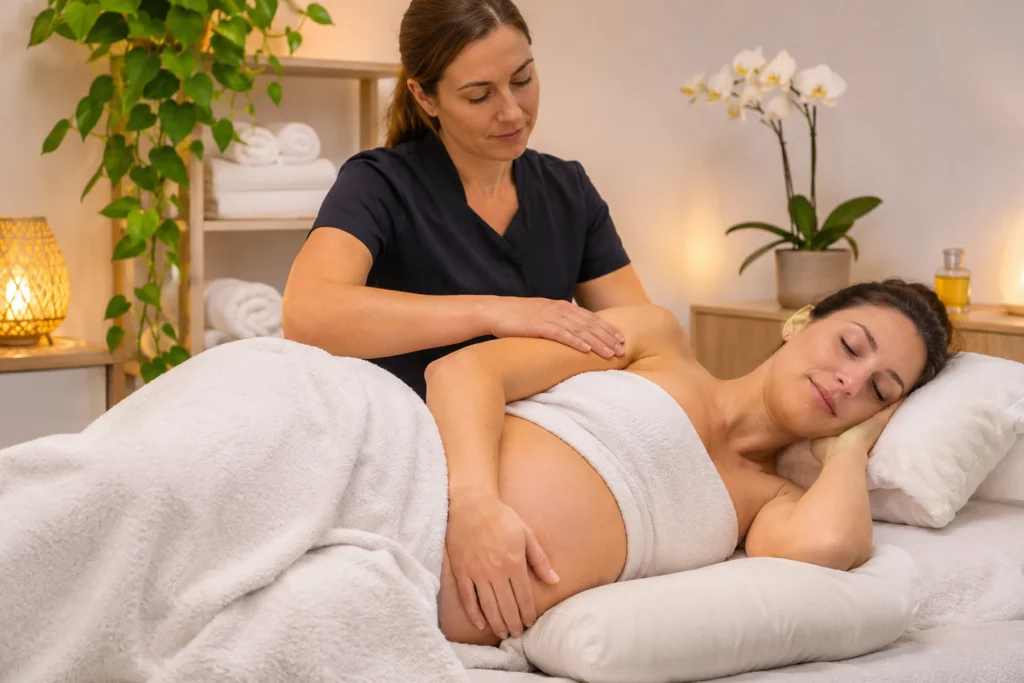
Pregnancy massage is a gentle, adapted massage for people who are expecting. For most straightforward pregnancies it is considered safe when given by a therapist trained in pregnancy massage, and many people find it eases back ache and helps them relax. This guide is mainly for clients. It covers what happens in a session, how positions change as your bump grows, and the times to check with your midwife first.
Massage is complementary. It doesn’t replace your antenatal care, and your midwife or GP should always come first with any worry about your pregnancy.
How pregnancy massage differs from a normal massage
A trained therapist changes three main things:
- Position: you lie on your side, supported by pillows, or sit semi-reclined. You won’t lie flat on your front, and you won’t stay flat on your back for long in later pregnancy.
- Pressure: the work is gentler, especially on the legs. Pregnancy raises the risk of blood clots, so therapists avoid deep pressure on the calves and thighs.
- Oils: many therapists use a plain carrier oil, or only a small number of essential oils in a very weak blend, because some essential oils aren’t recommended in pregnancy.
The tummy is either left alone or given only light, gentle strokes.
What to expect at each stage
First trimester (up to about 12 weeks). There’s no evidence that gentle massage causes miscarriage. Even so, many therapists prefer to wait until after 12 weeks, or ask that you check with your midwife first. Ask when you book.
Second trimester. This is when most people start. Expect a side-lying or semi-reclined position, with cushions under your bump and between your knees.
Third trimester. Side-lying becomes the norm. From 28 weeks, the NHS and the charity Tommy’s advise going to sleep on your side, and a good therapist positions you the same way. Sessions may be shorter if you find it hard to stay comfortable.
What pregnancy massage can help with
A 2021 review of 12 trials, published in the Journal of Clinical Medicine, found that massage in pregnancy was linked with less stress, anxiety and low mood, and less back and leg pain. Side effects were rare and minor, such as tiredness.
The trials were small, and most only included healthy, low-risk pregnancies, so the findings may not apply to everyone. Many people simply find it a calm hour that eases aching hips and shoulders. For a broader look at the evidence, see our guide to the health benefits of massage.
When to check with your midwife first
Talk to your midwife or doctor before booking if:
- your pregnancy is classed as high risk, or you have problems with the placenta
- you’ve had a blood clot, or a bleeding or clotting disorder
- you have high blood pressure, diabetes (including gestational diabetes) or a heart condition
- you’ve had any bleeding or unexplained pain
Don’t have a massage, and contact your midwife or maternity unit straight away, if you have sudden swelling of your face, hands or feet, a severe headache or problems with your vision. These can be signs of pre-eclampsia. The same goes for pain, redness or swelling in one leg, which can be a sign of a clot.
Choosing a pregnancy massage therapist
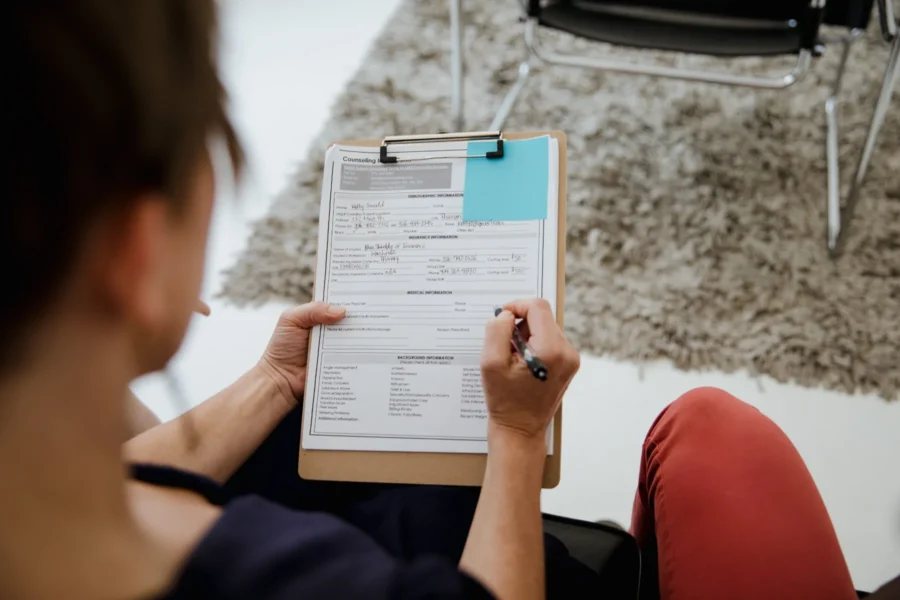
Look for a therapist who has done specific pregnancy massage training and whose insurance covers it. A good one will ask how many weeks you are, how your pregnancy is going and whether there’s anything your midwife has flagged. If they don’t ask, that’s a warning sign.
Our page on how to choose a qualified therapist lists what else to check. Many pregnancy massages are based on a gentle relaxing massage, adapted for position and pressure. For typical costs, see our guide to massage prices in London.
Common questions
Can I lie on my front?
Not in a standard pregnancy massage. Some clinics have special cushions with a space for the bump, but side-lying is the usual, comfortable choice.
Is pregnancy massage safe in the first trimester?
Gentle massage isn’t known to cause harm, but many therapists wait until after 12 weeks. If you’d like one earlier, ask your midwife and choose a therapist trained in pregnancy work.
Can I have a massage after the baby is born?
Yes, many therapists offer postnatal massage. Ask your midwife or GP when it’s right for you, especially after a caesarean.
Will the therapist use essential oils?
Only if you’re happy with them, and usually only a few that are considered suitable in pregnancy, in a weak blend. You can always ask for plain oil.
Therapists share how they adapt treatments for pregnant clients in the client care forum. For more treatments explained in plain English, browse our massage guides.