
Deep Tissue Massage: How It Works and What to Consider
Slow, focused pressure on deeper muscle layers. How deep tissue massage differs from Swedish, what it feels like, aftercare, and who should avoid it.
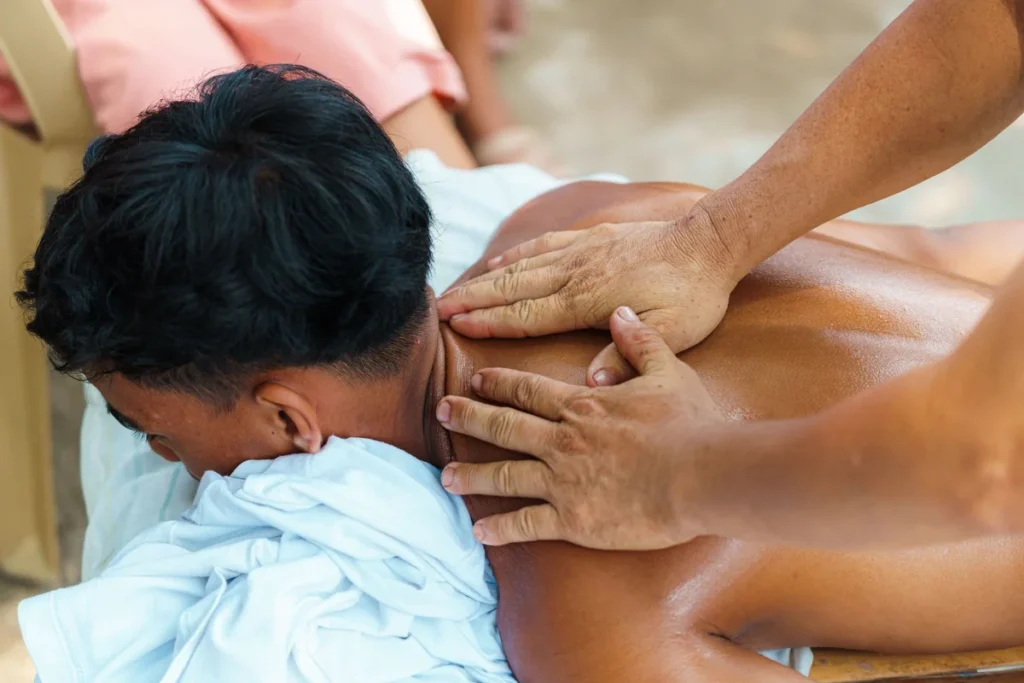
Deep tissue massage uses slow strokes and sustained pressure to work on the deeper layers of muscle and the connective tissue around them. It is usually chosen for persistent tightness, such as a stiff upper back from desk work or tight legs from running, rather than for pure relaxation.
How it differs from Swedish massage
Many of the strokes are the same, but they are slower and more targeted. Instead of covering the whole body evenly, the therapist spends longer on specific areas, often using forearms, elbows or knuckles as well as hands, and may work across the direction of the muscle fibres as well as along them. Oil or wax is normally used, though often less than in a relaxing massage so the therapist can keep a steadier grip.
Should it hurt?
Deep does not mean painful. You may feel intense pressure and some “good discomfort” over tight areas, but sharp pain is a signal to ease off, and it makes muscles tense up rather than release. A useful rule is that you should be able to breathe normally throughout. Tell your therapist if the pressure is too much; adjusting it is routine.
Some soreness for a day or two afterwards is common, much like after a hard workout. It should be mild and improve quickly.
What it can help with
People commonly book deep tissue massage for:
- ongoing neck, shoulder and upper back tension
- tightness linked to posture or repetitive work
- muscle tightness from running, cycling, gym training and other sport
- general stiffness that a lighter massage does not reach
Evidence suggests massage can ease muscle pain and stiffness in the short term. For a lasting improvement, it works best combined with changes to whatever is causing the problem, such as workstation set-up, movement, strength work or rest. If pain is severe, unexplained or getting worse, see a GP or physiotherapist first. If you play sport or train regularly, our guide to sports massage explains how it differs.
Who should avoid it or check first
Deep pressure is not suitable for everyone. Speak to a doctor before booking, and tell your therapist, if you:
- have or have had a blood clot (deep vein thrombosis), or take blood-thinning medication
- have had recent surgery, or are having cancer treatment or radiotherapy
- have osteoporosis or another condition that weakens the bones
- are pregnant; a gentler pregnancy massage from a trained therapist is usually more appropriate
- have open wounds, skin infections, recent fractures or acute inflammation in the area
Aftercare
- Take it easy for the rest of the day and avoid very heavy training straight away.
- Gentle movement, such as walking or light stretching, often helps with next-day soreness.
- Keep hydrated. It is good general advice, although massage does not release “toxins” that need flushing out.
For therapists
Pressure, consent and client communication come up often in deep tissue work. If you want advice on handling a client who asks for more pressure than is safe, start a thread in the community forum.