What Is Reflexology? A Clear Guide to the Treatment
Pressure applied to points on the feet, hands and ears. What reflexology involves, what the evidence says, what a session is like, and how to find a qualified reflexologist.
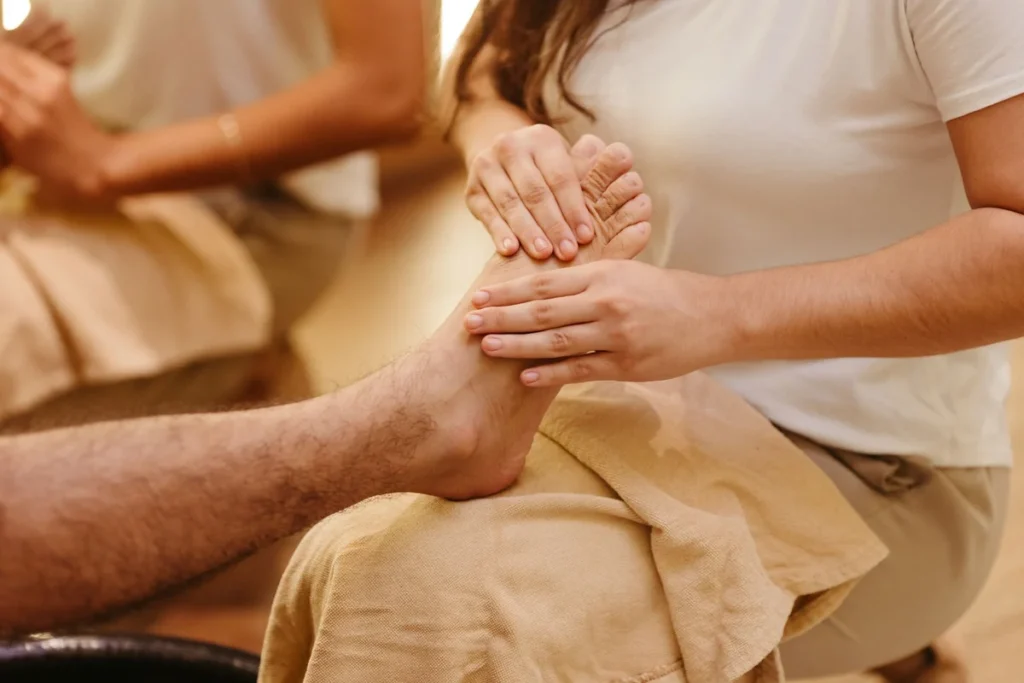
Reflexology is a complementary therapy in which a practitioner applies pressure to specific points on the feet, and sometimes the hands or ears. It is based on the idea that areas of the feet correspond to other parts of the body, laid out as a “map”. Reflexology is not simply a foot massage, although many people find it just as relaxing.
Where it comes from
Treatments involving pressure on the feet appear in several ancient traditions, including in Egypt and China. Modern reflexology took shape in the early twentieth century, when American physician William Fitzgerald described “zone therapy”. Physiotherapist Eunice Ingham later developed the detailed foot maps most reflexologists use today.
What the evidence says
There is no good scientific evidence that reflex points are connected to organs, or that reflexology can diagnose, treat or cure any illness. Where studies have found benefits, they are mainly in how people feel: relaxation, reduced anxiety and, for some people, short-term relief from pain or nausea alongside medical treatment. Some NHS hospices and cancer services offer reflexology for comfort and relaxation for that reason, not as a treatment for the disease.
Reflexology should complement medical care, never replace it. A responsible reflexologist will not claim to diagnose conditions or advise you to stop any treatment.
What happens in a session
A first appointment usually lasts about an hour and starts with questions about your health and lifestyle. You remove your shoes and socks and sit back in a reclining chair or lie on a couch, otherwise fully clothed. The reflexologist works over each foot in turn using thumb and finger pressure, holds and small movements. Some areas may feel tender. Say if anything is uncomfortable, and pressure will be adjusted.
That clothes-on format suits people who would rather not undress or have oil on their skin, and it is easy to fit into a lunch break.
Who should check first
Reflexology is gentle and suitable for most people. Talk to your GP first if you are pregnant, have a blood clot or circulation problem in the legs, have a foot injury, gout or an infection such as athlete’s foot, or have a serious medical condition.
Finding a qualified reflexologist
Reflexology is not regulated by law in the UK, so check training and membership before you book. Practitioners can join professional bodies such as the Association of Reflexologists, and can register voluntarily with the Complementary and Natural Healthcare Council (CNHC), which holds an Accredited Register approved by the Professional Standards Authority. Ask about insurance too.
For practitioners
Many massage therapists add reflexology to their treatments. If you are considering a course, or want to compare how others in London price combined treatments, ask in the community forum.