Thai Massage: Technique, Benefits and What to Expect
Clothed, oil-free and done on a mat, traditional Thai massage combines pressure along energy lines with assisted stretches. Here is how it works and who it suits.
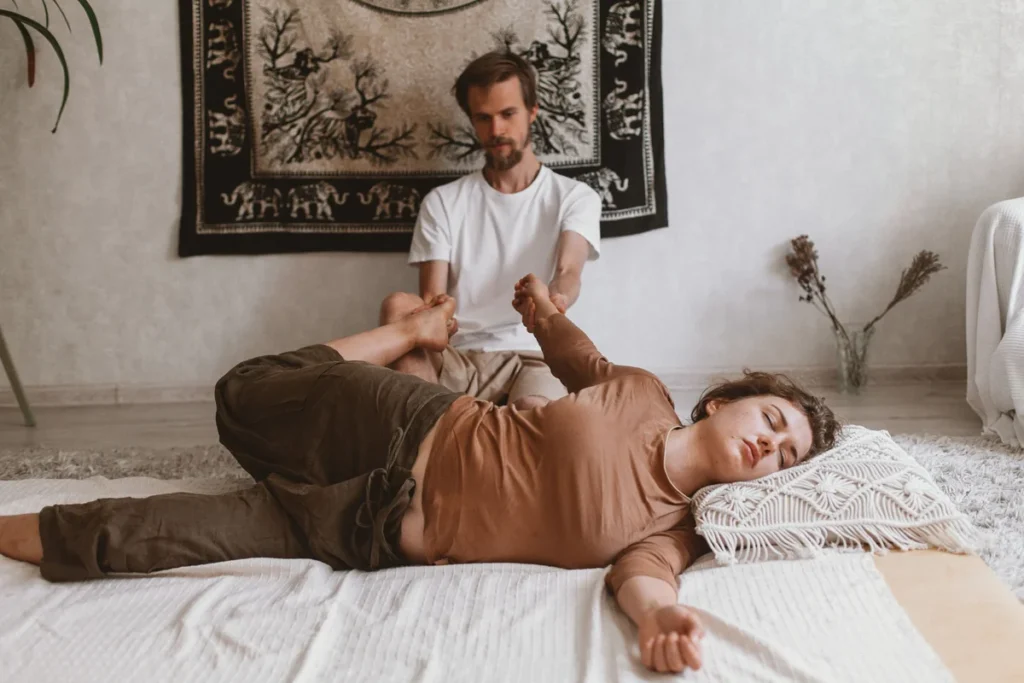
Traditional Thai massage, known in Thailand as nuad thai, is very different from the oil-based massage most people in the UK know. You stay fully clothed, there is no oil, and the treatment usually takes place on a padded mat on the floor. The therapist uses palms, thumbs, elbows, knees and feet to apply rhythmic pressure, and moves your body through a series of assisted stretches.
Where it comes from
Thai massage developed over centuries from a mix of influences, including Indian Ayurvedic medicine, Buddhist practice and Chinese medicine. Tradition credits its founding to Jivaka Kumar Bhaccha, physician to the Buddha, and the temple of Wat Pho in Bangkok has long been a centre for teaching it. In 2019 UNESCO added nuad thai to its list of the Intangible Cultural Heritage of Humanity.
The traditional theory describes energy lines called sen running through the body, and the treatment follows these lines. Many Western practitioners describe the same work in terms of muscles, fascia and joint mobility.
What a session feels like
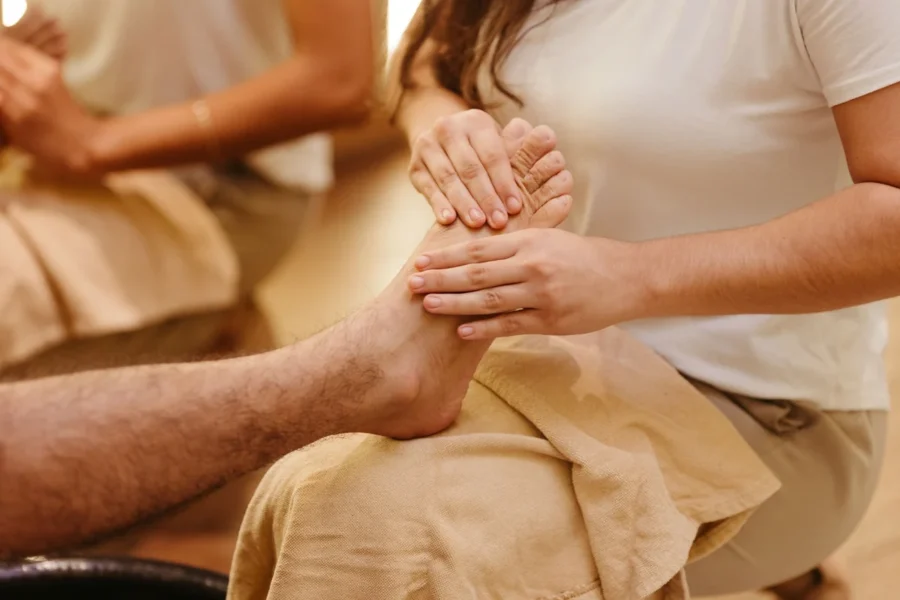
Wear loose, comfortable clothing, or use the clothes provided. A session typically lasts 60 to 120 minutes and often starts at the feet. Pressure is firm and rhythmic, and the stretches can be quite dynamic: your therapist may lift, rotate or gently fold your body into positions you would struggle to reach alone. It is sometimes called “lazy person’s yoga” for that reason.
It should feel strong but not painful. Tell your therapist if a stretch goes too far; good practitioners work within your range.
Possible benefits
People choose Thai massage for its mix of pressure and stretching. Research is more limited than for some other therapies, but small studies suggest it may help with:
- muscle tension and stiffness, including in the back and shoulders
- flexibility and range of movement
- feelings of energy and relaxation afterwards
- some types of tension headache
Claims that Thai massage removes toxins, strengthens the immune system or reduces cellulite are not supported by good evidence.
Who should take care
Because of the stretching, Thai massage is not ideal for everyone. Check with a doctor first, and tell your therapist, if you have:
- a recent injury, surgery or joint replacement
- osteoporosis, a spinal problem or hypermobility
- a heart condition or high blood pressure
- a pregnancy; only see a therapist trained in prenatal work
Avoid alcohol beforehand and eat lightly in the couple of hours before your session.
A note on reputation
Thai massage is a recognised therapeutic tradition and has nothing to do with the adult services that sometimes use its name online. Qualified Thai massage therapists in London often deal with misleading enquiries because of that confusion. If that affects your business, the community forum is a good place to compare how other therapists word their listings and screen enquiries.